A chartered yacht works best as a retreat for a leadership team of roughly six to twelve people, for three or four nights, in the quieter weeks either side of summer. Twelve is the ceiling on most charter yachts because of how maritime safety rules define a passenger ship, so a larger group needs two yachts or a yacht with rooms ashore. The cost is the yacht’s base rate plus a provisioning allowance, tax where it applies and a crew gratuity, which in the western Mediterranean usually adds 60 to 80 per cent to the headline figure. Per head it is rarely cheaper than a good hotel offsite. What it buys is a venue nobody else is in.
The rest of this guide takes those points one at a time. For what the days themselves feel like, see our corporate retreat page.
Why most yachts take 12 guests
Almost every charter yacht, whatever its length, is certified to carry no more than 12 guests. The number comes from safety regulation, not from the number of cabins.
Under international maritime safety rules, a vessel carrying more than twelve passengers is a passenger ship and must meet the standards written for ferries and cruise ships. The European directive on passenger ship safety puts it in one line: a passenger ship is “a ship which carries more than 12 passengers”. A passenger is everyone aboard other than the master, the crew and others working on the ship.
Yachts built for charter are certified below that line. The Red Ensign Group Yacht Code, a standard widely used for large yachts and published in the United Kingdom by the Maritime and Coastguard Agency, applies in its Part A to vessels of 24 metres and over “in commercial use for sport or pleasure” that “carry no cargo and no more than 12 passengers”. A separate Part B covers yachts carrying more than 12 but not more than 36 passengers, with design, construction and crewing requirements much closer to those of a passenger ship. A small number of large yachts are built to that standard. Most owners choose not to, which is why a yacht with eight staterooms may still be limited to 12 guests on charter.
Two practical notes follow. The limit applies to people, not beds, so an extra colleague cannot join for one night on a sofa. And some yachts are licensed for fewer than 12, so the certificate matters more than the brochure. Your broker will confirm the figure for the yacht in question.
What that means for team size
Twelve guests usually means around six cabins, each sleeping two. Colleagues are not couples, and most leadership teams prefer a cabin each. That makes the comfortable number for a single yacht closer to six or seven, unless some of the team are content to share a twin.
It is worth settling this early, because it decides the yacht. A team of ten with a cabin each needs either a much larger yacht or a second one. Our guide to yacht size explains how length changes the feel of life aboard.
Options for larger groups
There are three established ways to take more than 12 people, and each comes with a compromise.
| Format | Group size | How it works | What to check |
|---|---|---|---|
| One yacht | Up to 12 (6 or 7 with a cabin each) | Everyone lives and works aboard | Certified guest number, cabin layout |
| Two yachts in tandem | 13 to 24 | Yachts cruise together and anchor side by side | Matching standards, one itinerary, tender plan |
| Yacht plus shore rooms | 13 and up | Core team sleeps aboard, others in a hotel nearby | Day-guest limit under way and alongside |
| Day or static charter | Varies by licence | Yacht used as a venue, at anchor or in port | The yacht’s day or static licence, in writing |
Two yachts in tandem. Two or more yachts are booked together and run as one event, with the captains and crews coordinating. At anchor the yachts can lie close or rafted together so guests move between them. Brokers publish examples of this: Northrop & Johnson describes a three-yacht charter that carried 34 guests with 21 crew. For a retreat it has a quiet advantage, which is that a second yacht is a ready-made breakout room. The cost is, simply, two charters.
A yacht plus shore accommodation. The senior team sleeps aboard and the wider group stays ashore, joining for the day. This only works within the yacht’s limits. The 12-passenger rule generally applies whenever the yacht is under way, so twenty people cannot cruise to lunch on a yacht certified for twelve.
Day and static charters. Some yachts hold a licence to carry more guests on day trips, or to host a larger number while moored in port, which the industry calls a static charter. Published figures vary enormously, from a few dozen to, on a handful of very large vessels, well over a hundred day guests. These capacities are specific to each yacht, its flag and the local port authority. Treat any number as unconfirmed until it appears in the contract.
One more point of etiquette that is also a contractual one: say at the outset that the charter is for business. Corporate use is subject to the owner’s permission.
How a charter is priced
A crewed yacht is priced as a whole, by the week, and not per person. Four layers make up the real cost. The figures below are typical at the time of writing, taken from the published guidance listed in our sources, and your broker will confirm the current position for a specific yacht and itinerary.
| Layer | Typical level | What it is |
|---|---|---|
| Base rate | Set per yacht, per week | The yacht, crew wages, insurance |
| Advance Provisioning Allowance (APA) | About 25 to 40% of base rate, often around 30% | A running account for food, drink, fuel and berthing; unspent funds are returned |
| VAT | France 20%, Spain 21%, Italy 22%, Croatia 13% | Charged on the charter fee where the charter starts |
| Crew gratuity | 10 to 20% of base rate | Discretionary, paid at the end |
A worked illustration, not a quote: on a base rate of 100,000 euros for a week starting in France, an APA of 30 per cent adds 30,000, VAT at 20 per cent adds 20,000, and a gratuity of 10 to 20 per cent adds 10,000 to 20,000. The total is 160,000 to 170,000 euros, or about 13,000 to 14,000 euros a head for twelve people. With six people in single cabins the same yacht costs twice as much per person.
Two things move that figure for a retreat specifically.
Length. The standard charter period is a week. A three or four night retreat is a short charter, which owners accept at their discretion and more readily outside July and August. Expect the rate to be worked out from the weekly figure, sometimes with a premium, and ask for it in writing.
Tax. VAT on charters is complicated. The rate depends on where the charter begins, and treatment differs by country and sometimes by itinerary. Outside the European Union, Norway has its own value added tax system, and we have seen inconsistent published figures for how it applies to charter fees. Do not budget from a table on a website, including ours. Ask your broker for the tax position in writing.
For a fuller explanation of each layer, see our guide to what a charter actually costs, which was written for couples but describes the same mechanics.
A yacht against a hotel offsite
We cannot give a sourced average for a hotel offsite, because the range is too wide to be meaningful. The honest comparison is structural.
A hotel is priced per room and per delegate, so the cost rises with headcount. A yacht is a fixed cost that falls per head as you fill it, up to twelve. A hotel adds meeting-room hire, private dining and activities as separate lines. On a yacht the venue, the chef and the equipment are inside the base rate, and food and fuel come out of the APA. A hotel is flexible on numbers and nearly always cheaper per person. A yacht is exclusive by default: there is no lobby, no other guests, and no one at the next table.
If the retreat is for a difficult conversation or a strategy that is not yet public, that exclusivity is what is being paid for.
Working space, connectivity and privacy
A yacht is not a conference centre. The main saloon or a dining table for twelve serves as the boardroom. The aft deck, the sundeck and the foredeck become breakout spaces. Some larger yachts have a dedicated office or a cinema room with a screen, and it is worth asking about screens and seating before choosing.
Connectivity has changed in the past few years. Low-earth-orbit satellite services now reach yachts at sea, and the difference is substantial: in an early published report from 2022, one yacht’s captain described moving from 40 to 80 megabits per second on a traditional system to a consistent 150 to 200 on Starlink. Not every yacht has it, coverage and data plans differ, and high latitudes deserve a specific question. If the team must hold a video call, ask the captain what the yacht achieves in the cruising area, and have the answer before you sign.
Privacy is the yacht’s natural strength, with two caveats. The crew are present and hear a good deal; a non-disclosure clause is a normal request. And twelve colleagues on one vessel need room to be alone. Build empty hours into the plan.
A sample four-day format
Four days and three nights is enough for most teams. This is a pattern, to be adjusted, and it assumes short passages.
Day one - arrive and stop. Board in the mid afternoon. Safety briefing, a swim, an unhurried dinner. No agenda. The yacht stays in or near port so latecomers can join.
Day two - the main working day. An optional early swim or stretch on deck, then breakfast. A three-hour session in the morning while the yacht is still at anchor and minds are fresh. Lunch, then two or three hours with nothing scheduled: paddleboards, a walk ashore, sleep. A shorter session before dinner.
Day three - move and talk. A short passage after breakfast to a new anchorage. Use the afternoon for the conversations that go better side by side than across a table: a coastal walk, a tender ride, a kayak. Final dinner aboard or ashore.
Day four - decide and leave. One closing session of ninety minutes to agree what happens next. Disembark by late morning.
Five or six hours of structured time on the full days is plenty, with none on the first evening.
When to go
In the Mediterranean, July and August are the high season and the wrong months for a retreat: rates are at their highest, anchorages are busy and owners want full weeks. The shoulder months on either side are cheaper, quieter and more open to short charters. May, June, September and early October are the weeks we would look at first. Our French Riviera guide and Sardinia month-by-month guide cover the conditions in detail.
In Norway the logic differs. The season is short and summer is the calm, light part of it. North of the Arctic Circle the sun does not set at all for weeks: Visit Norway gives 28 May to 14 July for the Lofoten Islands and 20 May to 22 July for Tromsø. Our Norway month-by-month guide sets out the rest of the year.
The Mediterranean or Norway
The Mediterranean option. The French Riviera is the easiest place in Europe to gather a team: a major airport at Nice, a very large charter fleet, and short distances between harbours and quiet anchorages. It suits a first retreat and a team that is short of time. Sardinia is a step quieter and wilder, with clearer water and fewer distractions ashore, at the cost of slightly more travel. In either, choose the shoulder season and avoid the weeks of the major Riviera events, when berths are scarce and rates climb.
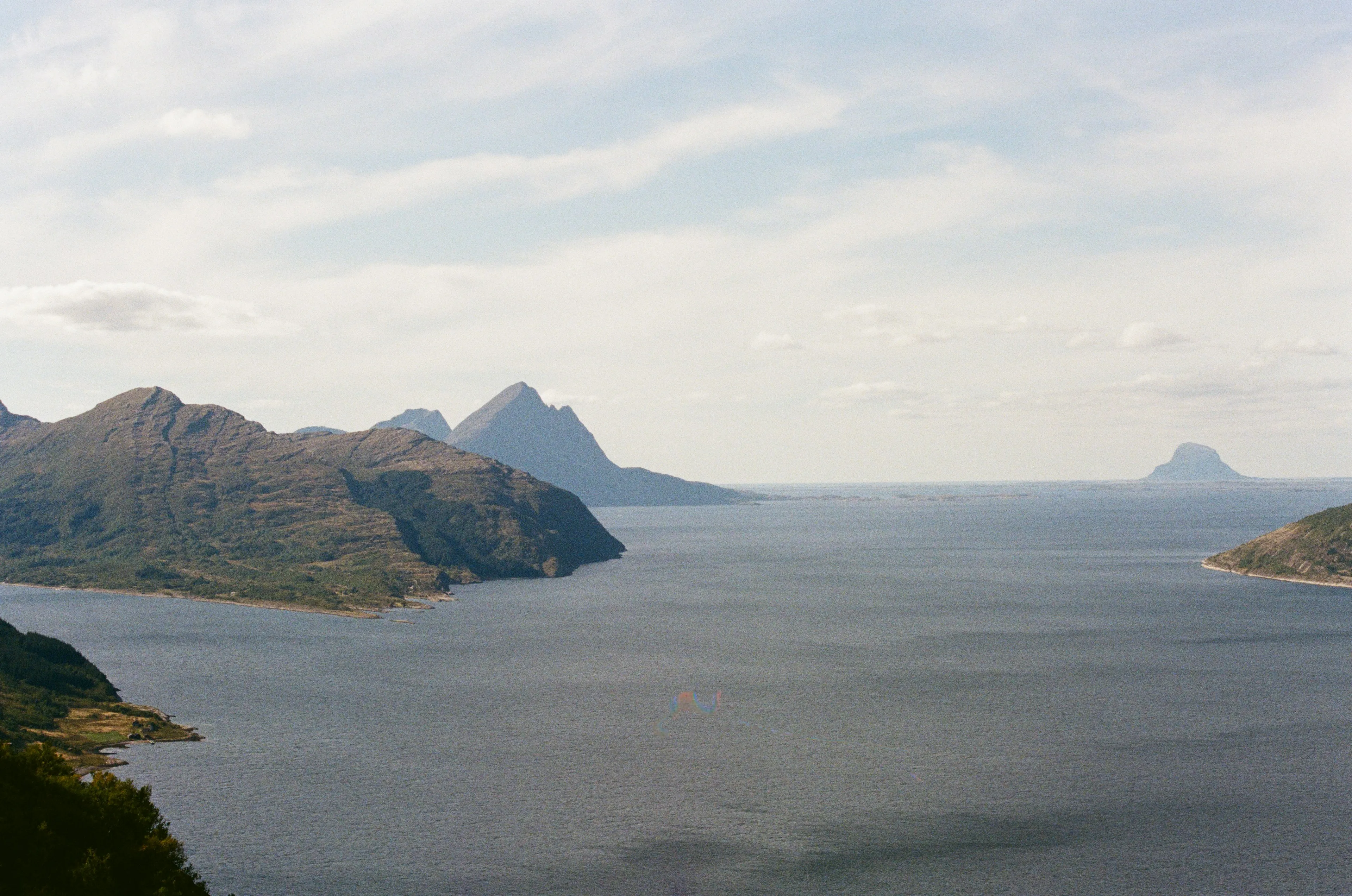
The Norway option. Norway is the choice for an expedition-style retreat: fjords, mountains rising from the water, hiking and kayaking from the yacht, and above the Arctic Circle the strange clarity of a night that never gets dark. The fleet is far smaller than in the Mediterranean, yachts suited to the far north are often explorer vessels that must be booked well ahead, the water is cold and the weather has more say. It suits groups that bond by doing things together, and it overlaps with what we describe on our active wellness page.
A simple way to choose: if the retreat is mainly conversation with rest around it, go to the Mediterranean in June or September. If it is mainly shared experience with conversation around it, go north in June or July.
Questions to ask before you commit
- How many guests is the yacht certified to carry overnight, and under way by day?
- How many cabins are there, and which can be made up as twins?
- Does the owner accept a business charter of three or four nights on our dates?
- What is the all-in estimate: base rate, APA, tax and customary gratuity?
- What connection speed does the yacht achieve in the cruising area?
Our how it works page describes the process from first conversation to boarding, and you can send us the outline of what you have in mind whenever you are ready.
Figures in this guide are indicative and were checked at the time of writing; guest limits, tax treatment and rates vary by yacht, flag and itinerary, and your broker will confirm each of them before you commit.