The question arrives, reliably, within the first hour of every wellness charter. A guest stands at the railing, looks at the water, looks at the crew, looks at the yoga mats arranged on the foredeck, and asks: “So, what are the rules?”
There are no rules. This is the first thing that distinguishes a wellness charter from the wellness experiences most people have encountered on land - the silent retreats with their prescribed schedules, the resort spas with their timetabled treatments, the boot camps with their mandatory six o’clock starts. A wellness charter borrows from all of these traditions but is bound by none of them. There is no schedule unless you want one. There is no programme unless you design it. There is no obligation to do anything at all, and there is certainly no rule that says you cannot have a glass of wine with dinner.
What there is, instead, is an environment. And the environment is the point.
Starting with How, Not Where
A conventional yacht charter begins with a destination. Where do you want to go? Greece? Croatia? The Caribbean? The itinerary follows from the answer, and the experience follows from the itinerary: you go to beautiful places, you eat well, you swim, you return home rested. It is a perfectly good holiday. There is nothing wrong with it.
A wellness charter begins differently. It begins with a question about feeling rather than geography: How do you want to feel at the end of this week? What do you want to leave behind? What do you want to find?
The answers vary. Some guests arrive burned out from work and want nothing more than silence and sleep. Some arrive numbed by routine and want to feel physically alive again. Some arrive as couples who have forgotten how to be alone together. Some arrive as families who have forgotten how to be together at all. The destination and the itinerary are then designed around these answers, not the other way around.
This inversion is subtle but its consequences are significant. A charter designed to restore sleep will favour calm anchorages, gentle evening routines, no early departures and a yacht with exceptional cabin acoustics. A charter designed for physical renewal will incorporate cold-water swimming, coastal hiking, paddleboarding and a menu built around anti-inflammatory nutrition. A charter designed for reconnection will prioritise unstructured time, communal meals, minimal technology and anchorages that are beautiful enough to make conversation unnecessary and inevitable in equal measure.
The destination still matters - and certain coastlines suit certain intentions better than others - but it serves the intention rather than defining it.
What Happens on Board
If you are picturing wall-to-wall yoga and green juice, recalibrate. A wellness charter is not an endurance test of virtue. It is, if anything, an exercise in permission - permission to sleep when you are tired, eat when you are hungry, move when your body wants to move and be still when it does not.
That said, most wellness charters include some or all of the following, available when and if you want them:
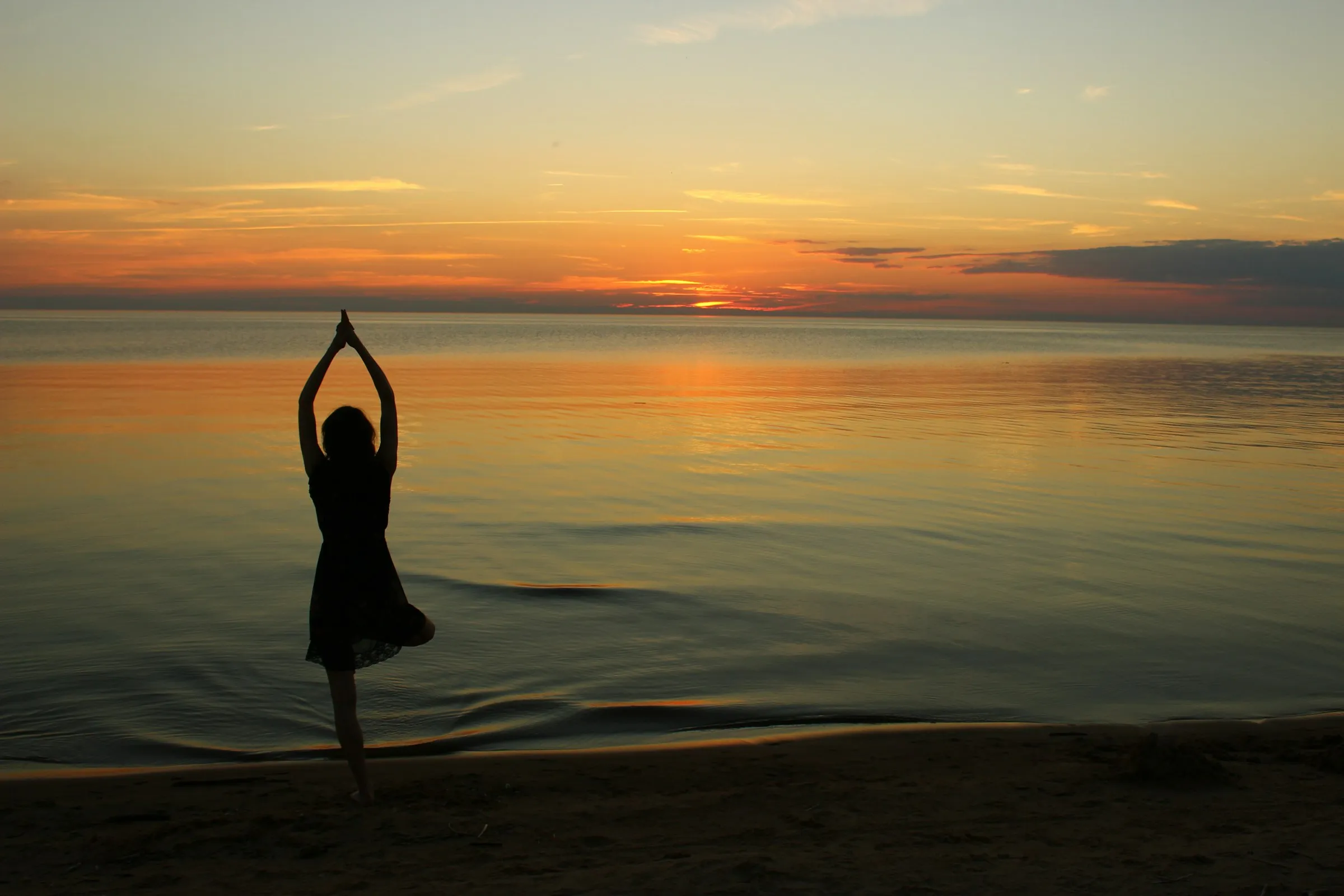
Morning movement on deck. This might be yoga, breathwork, tai chi or simple stretching, guided by either a dedicated wellness practitioner who joins the charter or the crew themselves (many experienced charter crew hold yoga or fitness certifications). It happens at sunrise, on the foredeck, with the water around you and the day ahead of you, and it is the single most consistently praised element of wellness charters. Not because of the exercise itself, but because of the context. Movement feels different on water. The slight pitch of the deck, the salt air, the horizon in every direction - these things change the experience of being in your body in ways that are difficult to articulate and impossible to replicate on land.
Nutritional intention. The onboard chef designs menus around your wellness goals, which might mean anti-inflammatory Mediterranean cuisine, plant-forward meals, elimination protocols for guests managing specific conditions, or simply the freshest possible ingredients sourced from harbour markets that morning. The difference from a standard charter is not restriction but attention - a deliberate focus on food that nourishes rather than merely satisfies, without any suggestion that satisfaction and nourishment are incompatible.
Water immersion. Swimming, snorkelling, paddleboarding, cold-water exposure if you are inclined - the sea is the yacht’s primary wellness facility, and it is available all day. The therapeutic effects of regular immersion in open water are well documented: reduced cortisol, improved vagal tone, enhanced mood. On a wellness charter, the swim platform becomes a threshold - the place where you leave the social world of the yacht and enter the private world of the water, however briefly.
Digital reduction. Most wellness charters encourage a technology pause, but the degree is entirely up to you. Some guests go fully offline for the week. Others check email once in the morning and once in the evening. The yacht does not confiscate your phone. What it does is create an environment where reaching for it feels less automatic - because the view from the deck is more interesting than anything on the screen, and because the neurological effects of sustained disconnection begin to compound after about forty-eight hours.
Bodywork and treatments. Depending on the yacht and the charter configuration, you may have access to an onboard massage therapist, physiotherapist or other wellness practitioner. Some larger yachts have dedicated spa spaces. Others adapt the aft deck or a quiet cabin for treatments. The setting - the gentle motion of the yacht, the sound of water, the absence of the ambient noise that fills every spa on land - makes even a standard massage feel qualitatively different.
What Does Not Happen
Equally important is what a wellness charter does not include, because the absences are as deliberate as the presences.
There is no alarm clock. Nobody wakes you up for a compulsory activity. If you sleep until ten, you sleep until ten, and the chef will have breakfast waiting whenever you surface. The science of sleep recovery suggests that the first three days of a yacht charter are often spent simply catching up on accumulated sleep debt, and interfering with that process for the sake of a scheduled yoga class would be counterproductive.
There is no weigh-in, no before-and-after measurement, no performance metric. A wellness charter is not a programme with quantifiable outcomes. It is a week (or two, or three) in an environment designed to remind your body and mind what they feel like when they are not under pressure. The outcomes are subjective and personal: you sleep better, you breathe more slowly, you notice things, you feel less hurried, you remember what you enjoy.
There is no forced socialising. If you have chartered the yacht privately, the only people on board are those you chose to invite. If you have joined a shared wellness voyage, the group will be small and the atmosphere is one of respectful coexistence rather than enforced camaraderie. You do not have to participate in group activities. You do not have to eat with others if you prefer to eat alone. The yacht offers community without requiring it.
And there is no guilt. This is perhaps the most significant difference from land-based wellness experiences, which can inadvertently create an atmosphere of moral obligation around health choices. On a wellness charter, having dessert is not a failure. Skipping the morning yoga is not backsliding. Spending an entire afternoon reading a novel in the shade is not wasted time. The operating principle is that you are an adult who knows what you need, and the yacht is here to make it available to you, not to enforce it.
The Transition Period
Most guests experience a transition during the first twenty-four to forty-eight hours. This is normal, well-documented and nothing to be concerned about. You may feel restless. You may find it difficult to sit still. You may reach for your phone every few minutes, not because you need it but because the gesture has become a reflex. You may feel, oddly, that you should be doing something, that the absence of a schedule represents a problem to be solved rather than a freedom to be enjoyed.
This passes. Research on the physiological arc of an extended break suggests that the nervous system needs approximately two days to shift from sympathetic dominance (the fight-or-flight state that most working adults inhabit permanently) to parasympathetic engagement (the rest-and-digest state in which recovery actually happens). During this transition, the yacht does its work quietly: the rhythm of the water, the absence of traffic noise, the natural light cycle, the gentle requirement to exist in a body rather than in a screen. By day three, most guests report a discernible shift - not dramatic, not sudden, but clear. Shoulders drop. Breathing slows. Conversation changes. The horizon stops being something you glance at and becomes something you watch.
How It Differs from a Standard Charter
The practical differences are worth naming, because they affect planning.
The crew may include a dedicated wellness practitioner - a yoga teacher, a meditation guide, a nutritionist or a physical therapist - who sails with you for the duration. This is arranged in advance and tailored to your stated intentions.
The itinerary is designed with a different rhythm. A standard charter often covers maximum ground, visiting as many destinations as possible. A wellness charter favours fewer stops, longer anchorages and more time at sea. The passage itself - the hours of motoring or sailing between destinations, when there is nothing to do except exist on the water - is treated as part of the experience, not as dead time between ports.
The galley operates on a consultative basis. Before the charter, you will have a conversation with the chef (directly or through your broker) about your nutritional goals, preferences, allergies and any specific protocols you follow. The resulting menus will be tailored, market-fresh and probably more delicious than you expect from food that is also good for you.
The technology environment is managed. This does not mean Wi-Fi is disabled (though some guests request this). It means the crew understands the wellness context and will not, for example, suggest you check the weather app when you could simply look at the sky.
Who It Is For
Everyone. That is the honest answer, and it is the one that surprises most first-time wellness charter guests, who arrive expecting to find a yacht full of people who meditate daily, eat exclusively organic and can hold a handstand for minutes at a time.
The reality is more varied and more interesting. Wellness charter guests include CEOs recovering from burnout, couples celebrating anniversaries, families with young children who want a holiday that leaves them feeling better rather than more exhausted, retirees exploring what a good life looks like when work is no longer the organising principle, and people who have never done yoga in their lives and have no particular interest in starting but who want a week on the water where someone has thought carefully about the food, the pace and the environment.
The common thread is not a commitment to wellness as a lifestyle. It is a suspicion - usually correct - that a holiday can do more than provide a break from normal life. That with the right setting, the right intention and the right amount of space, a week at sea can change how you feel in ways that last longer than the tan.
Halcyon Voyage designs wellness charters around how you want to feel, not just where you want to go. The Voyage Designer is the first step - five questions that help us understand your intentions. Or explore how it works for a complete overview of the charter process.